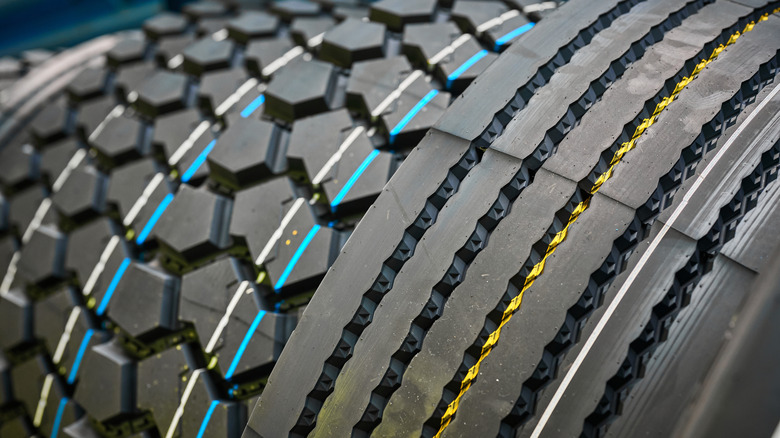
Tires play a critical role in vehicle performance, serving as the sole contact point between your automobile and the road. They influence how well your vehicle accelerates, brakes, and handles overall. Many truck and SUV owners may assume all tires are made similarly, but this is not the case. Major tire manufacturers offer specialized options tailored for various terrains, most notably classified as all-terrain, mud-terrain, and rugged-terrain tires.
These types of tires have distinct tread designs and compositions, making the selection of the right kind crucial for optimal performance based on your driving habits and vehicle type. Despite their similarities, the differences are substantial enough to affect fuel efficiency and safety. To assist you, this guide explores the unique characteristics of all-terrain, mud-terrain, and rugged-terrain tires, empowering you to make an educated choice for your vehicle.
All-terrain tires are ideal for mixed driving conditions
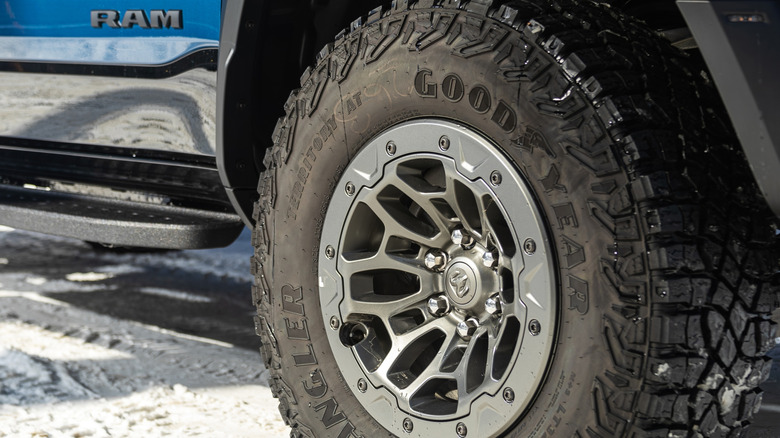
Among the tire options available, all-terrain (A/T) tires are the most popular choice, known for their versatility. They offer a balanced performance for both paved and off-road travel.
To navigate challenging terrains like steep hills, icy roads, or sandy areas, a 4WD or AWD vehicle equipped with A/T tires will perform admirably. These tires possess a more aggressive tread design with an open-block pattern, offering solid traction. The tread is wide enough to fend off debris while also ensuring stability on smooth surfaces. Furthermore, the deep grooves help with traction, loading, and water dispersion, which is essential for minimizing the risk of hydroplaning and making A/T tires suitable for light snow conditions.
Constructed with durable rubber compounds, A/T tires are recognized as long-lasting, typically averaging between 50,000 to 65,000 miles. However, for daily highway drivers, it is worth considering that A/T tires, while quieter than their M/T and rugged-terrain counterparts, can slightly lower fuel economy—around a 3% reduction.
Opt for mud-terrain tires for frequent muddy or rocky conditions
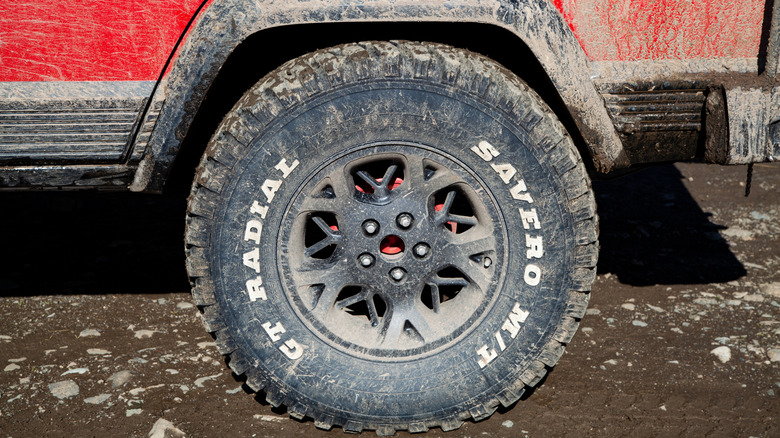
All-terrain tires such as the Toyo Open Country A/T III and BF Goodrich All-Terrain T/A KO2 are great for lighter off-road tasks. If you often engage in heavy-duty trail exploration, it’s advisable to consider mud-terrain (M/T) tires. These tires are specifically designed for challenging off-road situations including mud and rocky paths. In contrast to all-terrain tires, M/T tires feature more aggressive tread designs that deliver enhanced traction in difficult conditions.
The tread blocks of M/T tires are larger, deeper, and arranged with wider spacing, allowing them to dig into mud and snow effectively. The ample voids on the tread edges help in ejecting mud and debris, ensuring consistent grip. Moreover, M/T tires are constructed with softer rubber compounds that provide a high level of grip and are often rugged enough to resist wear and damage from harsh terrains. They also showcase extended shoulder lugs, which further assist with traction and protect against sharp rocks.
However, it’s important to note that M/T tires are not ideal for highway usage or extreme icy conditions. Their aggressive tread increases fuel consumption and produces notable road noise in comparison to A/T tires. Additionally, M/T tires are generally more expensive and tend to have shorter lifespans, necessitating more frequent replacements.
Rugged-terrain tires effectively combine features of A/T and M/T tires.
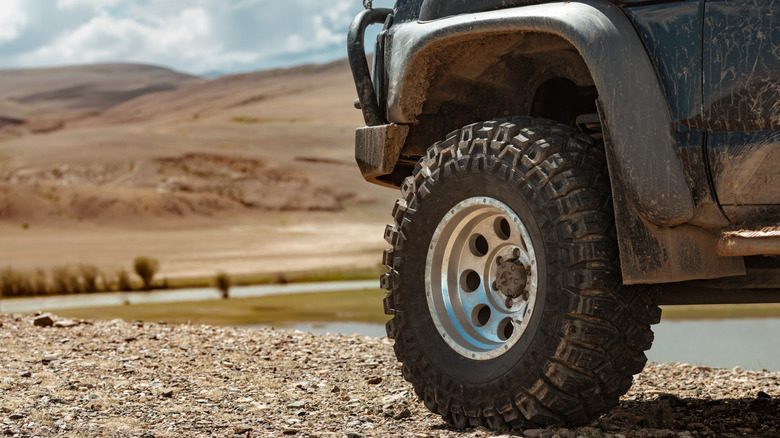
If you’re looking to enhance your truck or SUV for rugged landscapes without sacrificing road comfort, rugged-terrain (R/T) tires might be the solution. These tires combine the strengths of both A/T and M/T tires into one versatile design that excels in off-road traction while ensuring durability for demanding environments.
R/T tires adopt a more aggressive tread design compared to A/T tires, featuring wider and deeper voids that aid in gripping surfaces like mud, sand, and rocky paths. However, M/T tires are not as conducive to wet or icy driving. Instead, R/T tires incorporate siped tread blocks to help prevent slipping in such conditions. They also come with pronounced sidewall treads that improve strength and resilience against harsh elements while offering a quieter ride than M/T tires.
With reinforced 2-ply or 3-ply sidewalls, these tires are solid enough for demanding terrains while still providing a comfortable driving experience. Additionally, many R/T tires are compliant with standards for winter conditions, featuring symbols for snow and mud, indicating suitability for both on-road and challenging environments.