Following the attacks by the United States and Israel on Iran in late February 2026, it became crucial to assess the strength of Iran’s naval fleet. Unfortunately, detailed military assets information is typically classified, limiting the ability to make precise assessments. Thus, estimates serve as the primary method for estimating the number of submarines in Iran’s navy.
The Nuclear Threat Initiative suggests that prior to the aforementioned attacks, Iran maintained a fleet of approximately 28 to 30 submarines. For context, the United States possesses roughly 70 submarines in its inventory. The submarines in Iran’s fleet are generally considered less capable than their U.S. counterparts and are not nuclear-powered due to global sanctions. Iran’s submarine classes include the Tareq, Fateh, Nahang, and Ghadir. Although there is mention of a fifth class, the Besat/Qaem-class, it has been under development since 2007 and was not operational at the time of this report.
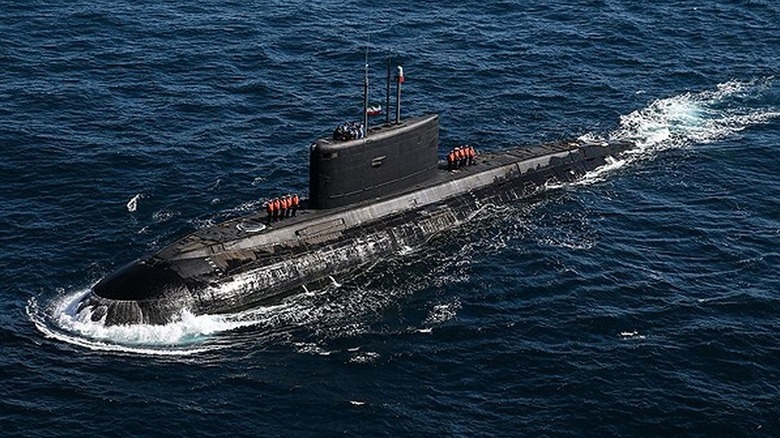
The Tareq-class submarines, the most formidable in Iran’s fleet, are built in Russia and modeled on the Kilo-class design. They measure 242 feet in length, 32 feet in width, and can reach speeds of up to 17 knots (nearly 20 mph). Equipped with six 533mm tubes, they can launch a total of 18 torpedoes and Anti-Ship Cruise Missiles (ASCMs), as well as deploy up to 24 mines. Reportedly, these submarines were retrofitted in 2012 and represent Iran’s most sophisticated submarine class to date.
Iran’s submarines display capability despite being less powerful than U.S. vessels
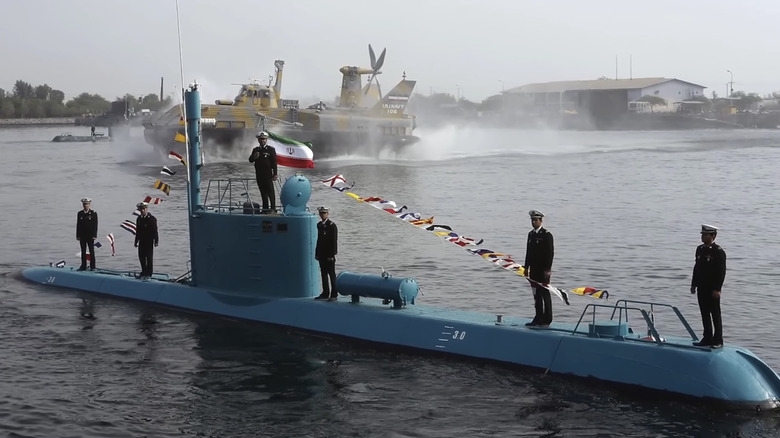
The Tareq-class submarines feature hulls that are equipped with advanced anechoic tiles made from synthetic composites that effectively distort sonar signatures. This innovative design has led to the nickname, “Black Hole” for the Tareq-class subs. They also boast impressive endurance, allowing them to operate for 45 days without refueling, with a range exceeding 6,000 miles.
Iran’s fleet includes three Fateh-class submarines, which are noted for being the most advanced submarines of Iranian design. They are 157 feet long and have a displacement of approximately 600 tons, with speed estimates varying between 14 and 23 knots (16 to 26 mph). Similar to the Tareq, they are equipped with six 533mm tubes for launching torpedoes and can also lay mines. The Nahang-class features a single mini-submarine that lacks torpedo launch capabilities yet can transport and deploy special operations personnel.
Comprising 23 vessels, the Ghadir-class mini-subs make up the majority of Iran’s submarine fleet. They are relatively small, measuring just 95 feet in length and about 9 feet in width. Powered by a diesel-electric system, these subs can achieve speeds of up to 9 knots (10 mph) and are equipped with two 533mm torpedo tubes, capable of launching Iranian Hoot high-speed supercavitating torpedoes. It is believed that these submarines share design elements with North Korea’s Yono-class submarine, which is still active alongside the North Korean tactical nuclear fleet.