
The conventional understanding of Earth’s water is that it primarily resides on the surface or close to it. While groundwater does exist, typically found at depths between 500 and 1,000 meters, most unusual occurrences—such as the ancient brine at Blood Falls in Antarctica—remain relatively shallow. However, a groundbreaking discovery made by researchers from Northwestern University and the University of New Mexico in 2014 challenged this notion. Their study, published in Science, revealed a substantial water reservoir located approximately 400 miles beneath the surface in North America.
This water is found within the mantle’s transition zone, a layer situated 250 to 410 miles below the Earth’s surface. The volume of water here is impressive; the researchers estimate that even if just 1% of the rock’s weight in that area comprises water, it would equate to around three times the total volume of the oceans we see today.
However, this isn’t conventional water you could swim in or collect in a bucket. Instead, it exists in the form of hydroxyl radicals. Under extreme pressure in this region, water molecules dissociate into hydroxyl radicals, which bond chemically to the mineral’s crystal lattice. These radicals become embedded in a mineral known as ringwoodite, a striking blue rock that forms only under the intense conditions found deep inside the Earth and is believed to be quite prevalent in the planet’s depths.
How the researchers made this discovery
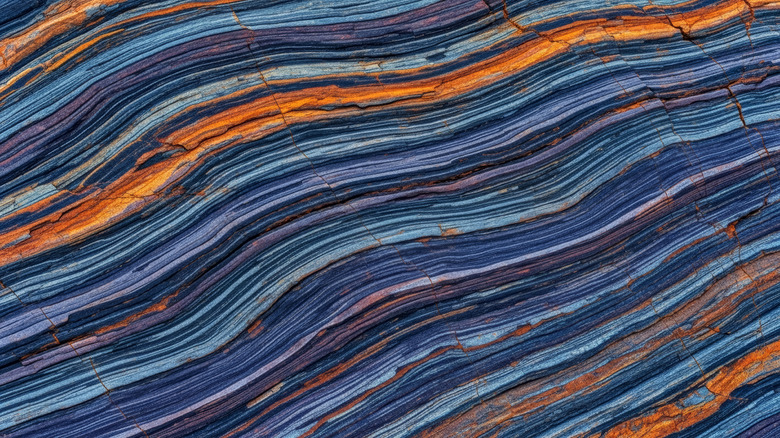
To identify this subterranean water, the research team analyzed data from over 2,000 seismometers placed across the United States, capturing seismic waves from more than 500 earthquakes. They meticulously studied how these waves changed as they traversed through various rock layers beneath the surface. Notably, if rock layers are saturated with water, these seismic waves exhibit a reduction in speed. When examining the transition zone of the mantle, they indeed observed a decrease in wave velocity, confirming the presence of the moisture-laden material.
It’s important to emphasize that seismic data wasn’t their only validation. The researchers had previously synthesized ringwoodite in laboratory settings and subjected it to conditions mimicking those found in the deep mantle. This experience enabled them to recognize the expected seismic signature of water-saturated ringwoodite before investigating its underground presence. As co-author Steve Jacobsen described to New Scientist, these water-containing rocks seemed to be “almost sweating”.
Interestingly, this discovery also provides insights into the long-standing enigma surrounding the origin of Earth’s oceans. A widely accepted hypothesis has posited that icy comets collided with Earth billions of years ago, delivering water to the planet’s surface. Alternatively, these findings imply the possibility that water from the Earth’s interior gradually seeped out to form the oceans over eons.