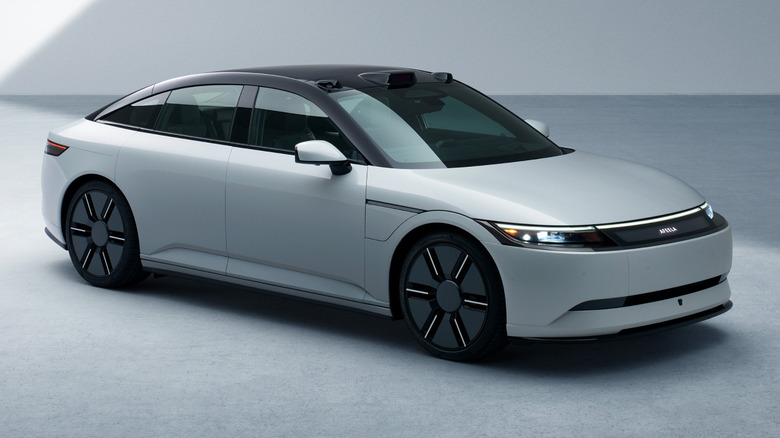
The partnership between Sony and Honda to create the AFEELA electric vehicle has officially been dissolved, as announced by Sony Honda Mobility, the joint venture responsible for developing the model. The decision, attributed to Honda’s shift away from its electric vehicle strategy, led the company to state, “In light of this change, SHM (Sony Honda Mobility) has concluded that there is no feasible path to market the Models as initially planned.”
Recently, Honda revealed plans to discontinue several anticipated electric models, including the Honda 0 EV, Saloon, and Acura RSX. This strategic pivot certainly posed challenges for Sony, as the joint venture was reliant on Honda’s new electric technology for the Afeela and its future iterations. The unavailability of new Honda EVs ultimately translated to the cancellation of the Afeela project.
For those puzzled by the idea of a Sony-branded electric vehicle, the Afeela was first unveiled in 2022 but has since been stuck in developmental uncertainty, with delays mirroring the tumultuous landscape of the electric vehicle market. The model even made an appearance in the video game Gran Turismo 7 as part of a promotional effort. As it stands, the Afeela is now but a digital concept without a physical counterpart.
Missed Competition Opportunities with Afeela
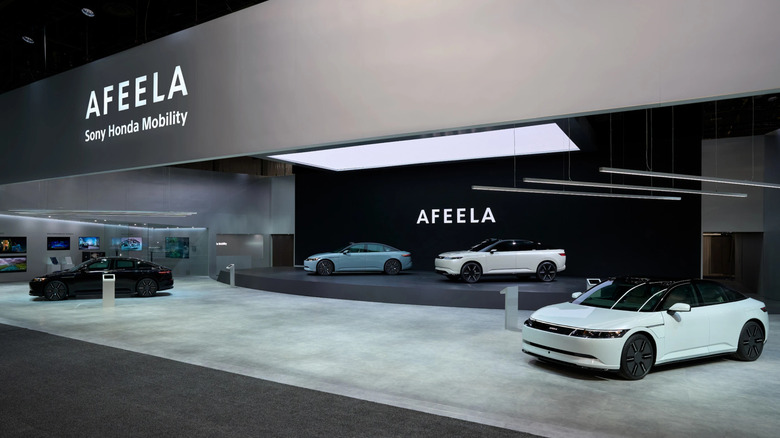
While theoretically appealing, the Afeela, born from a collaboration between two companies known for their high-quality standards, faced challenges in execution. The vehicle’s design was largely generic, and its specifications were not particularly impressive at launch.
With a dual-motor powertrain and a 91 kilowatt-hour battery promising an estimated range of approximately 300 miles, the initial price tag of $102,900 (with a later version pegged at $89,900) placed it beyond the reach of many potential customers and positioned it unfavorably against rivals like the base Lucid Air and Tesla Model S. Despite the reputations of Sony and Honda, the Afeela appeared more like a reaction to market trends than a well-considered product.
This situation is a reflection of Honda’s fluctuating approach to electrification. As consumer interest has ebbed and flowed, Honda’s strategy has shifted between fully electric vehicles and a continued reliance on hybrid models.
Misaligned Launch Timing
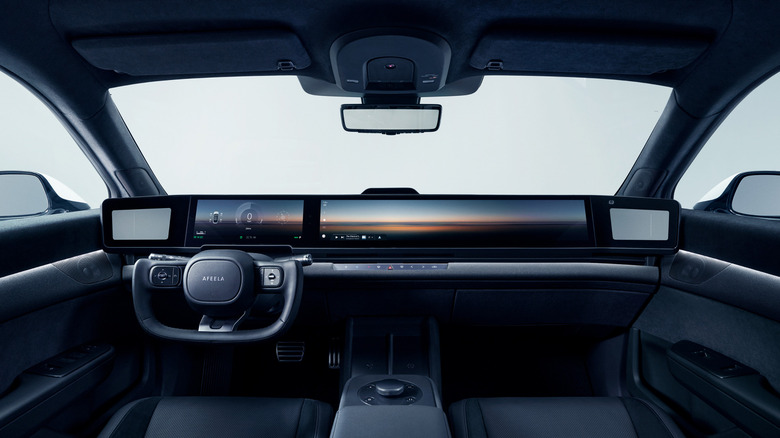
Currently, Honda’s sole electric vehicle available in the U.S. is the Prologue, which is based on technology sourced from General Motors. This offering falls short in 2026, a year when most automakers are already marketing multiple electric vehicles. While the Afeela had the potential to generate revenue for Honda to expand its EV lineup, the circumstances have rendered that conversation irrelevant.
Despite the technology integrated into the Afeela, it could not withstand broader economic factors, including its high price point and unremarkable design. The Afeela will now join the ranks of other tech company automotive ambitions, similar to the much-discussed Apple Car.
Ultimately, the Afeela seemed to be on an inevitable path towards failure since its inception. The market is already saturated with high-end sedans that offer little more than what is available elsewhere, particularly as demand has receded over the past year (a trend that may shift with rising fuel prices). Economy-friendly models like the Hyundai Ioniq5, Nissan Leaf, and new Chevy Bolt represent a more sensible direction for consumers. While luxury sedans can find their niche, they must also be competitive, particularly when they are the only offerings from a brand. In closing, we say farewell to the Afeela.