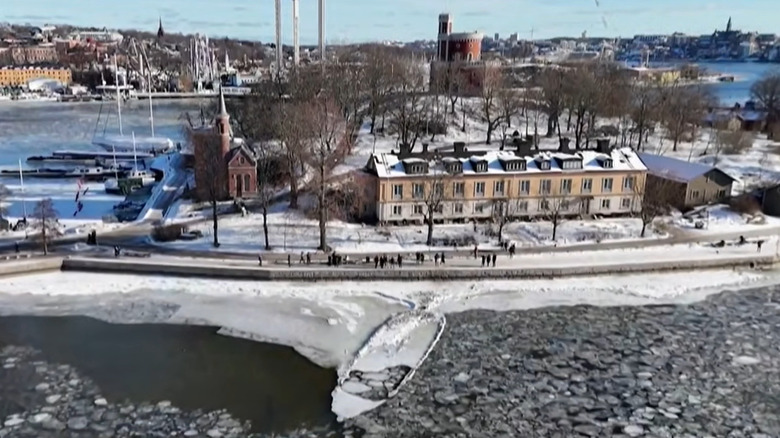
A historic vessel of the Swedish Navy, submerged in the Baltic Sea near Stockholm for 400 years, has become visible again. The ship, which was intentionally sunk in the 17th century, reappeared as water levels reached their lowest point in a century. Marine archaeologist Jim Hansson from Stockholm’s Vrak Museum of Wrecks provided insight into this phenomenon, stating that extended periods of high atmospheric pressure in the Nordic region have allowed Baltic waters to flow toward the North Sea and Atlantic.
This ship, lost around 1640, served as a foundation for a bridge to Kastellholmen island. There are currently five known shipwrecks in the vicinity. The Swedish Navy is exploring the possibility of reusing the vessel’s oak timbers instead of sourcing new materials. Researchers are also engaged in a project titled “The Lost Navy” aimed at identifying these submerged crafts.
What Factors Allowed the Shipwreck to Remain Intact for 400 Years?
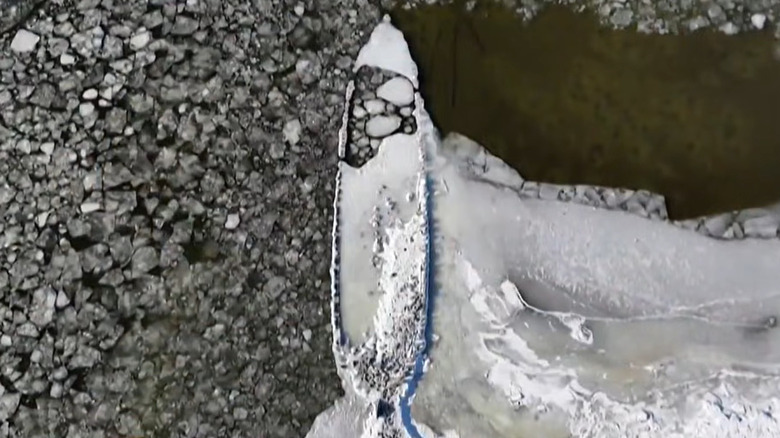
Although it may seem remarkable for a wooden ship to endure beneath the waves for four centuries, the conditions in the Baltic Sea have contributed significantly to the survival of this Swedish Navy vessel. As Hansson explains, the absence of shipworms in this region means that the submerged craft has largely escaped degradation. Shipworms, capable of growing up to two meters, use bacteria to digest wood, making them potent threats to wooden vessels.
Rather than decaying, the submerged ship has remained preserved, functioning almost as a time capsule due to the water that has kept its structure intact. Generally, vessels that rest at considerable depths can remain undisturbed for long periods; however, exposing the shipwreck can result in deterioration as the wood, previously held firm by water, begins to break apart.
This poses significant challenges in recovering the Vasa, another Swedish ship that sank in 1628, as its wood has suffered damage due to acidification caused by metal components once it was raised. While scientists have found that alkaline earth hydroxides can help neutralize the acids and preserve the wooden structure, maintaining uncovered shipwrecks remains a daunting task. The reduction in water levels in the Baltic Sea may further complicate the preservation efforts of this recently uncovered ship.