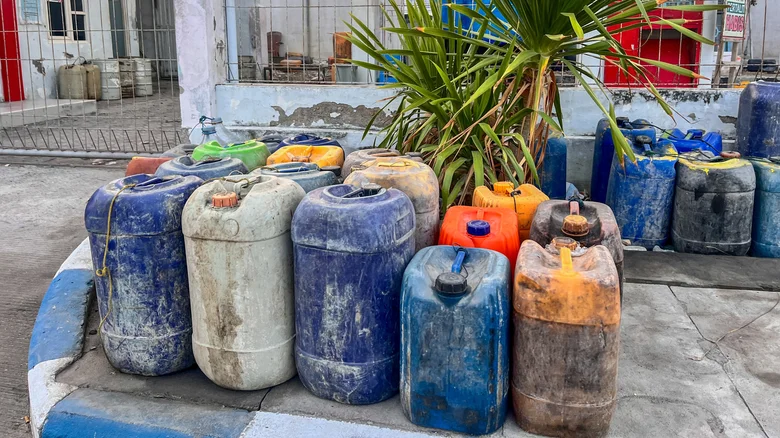

The primary issue at hand is the safety of storing gasoline itself. The vapor from just a cup of gasoline can equate to the explosive force of approximately five pounds of dynamite. Such a dangerous substance not only poses risks to property but can also lead to fatalities. Therefore, safe gasoline storage should always be a top priority, and there are several critical mistakes to avoid.
What makes this situation particularly precarious is the commonplace nature of gasoline in our lives. As we routinely handle it—at fuel stations, in garages, and with gardening tools—we often become complacent, which increases the likelihood of accidents. Below, we outline five of the most hazardous places to store gasoline that everyone should be aware of.
Inside your home (bedroom, closet, kitchen, basement)

Keeping gasoline in your home could be the most hazardous decision you could make. Surprisingly, many people do this despite warnings. The U.S. Consumer Product Safety Commission advises against storing gasoline indoors for good reason. Gasoline vapors are denser than air, making them hang close to the ground where they can seek out ignition sources.
For example, a family in California experienced a significant fire due to gasoline stored in a plastic container in a bedroom, which caused severe burns to multiple individuals. In another tragic case, individuals perished in Los Angeles when vapors escaped from gas cans stored in a kitchen and ignited from a stove’s pilot light. The threat isn’t solely fire-related; inhaling gasoline fumes can lead to health issues ranging from skin and eye irritation to potentially fatal consequences.
Moreover, using basements for storage is often prohibited due to the risk of vapor accumulation, posing a serious danger.
Inside your car (trunk or passenger cabin)

Placing a gas can in a car’s trunk or back seat may seem like a reasonable option, but this is an unsafe long-term practice. The CPSC warns against storing gasoline in vehicle compartments due to potential hazards. In addition to the risks of rear-end crashes, parked cars can heat up significantly in the summer, which can lead to pressure buildup in fuel containers, risking explosions or deformation.
It’s also critical not to fill containers while they are in the vehicle to prevent static electricity from igniting fumes. Always remove the canister from the car for safe refueling.
Near heat sources, appliances, or ignition points

Even if gasoline is stored correctly, placing it near heat sources can negate safety measures. Gasoline requires a stable temperature for safe storage; exposing it to heat can lead to gas vapor release and pressure buildup. Containers should be kept away from devices like water heaters, heaters, and furnaces, as prolonged heat exposure could damage the containers.
Proper distance from direct ignition sources, such as pilot lights or flames, should also be maintained. Additionally, various common tools—like cigarettes or welding machines—can spark flames around gasoline. Lastly, avoid storing gasoline near electric vehicle charging stations, which can also be sources of ignition.
In unventilated or enclosed spaces

While sealed sheds and storage rooms may seem appropriate for long-term goods like tires, they are not suitable for gasoline. These environments can trap vapor release, leading to hazardous concentrations that can ignite from even minor sparks, such as those from switches. Furthermore, entering areas with accumulated harmful vapors poses significant health risks, exacerbated by improper storage containers and high fuel volume.
Simply having a small opening for ventilation is generally inadequate. According to Occupational Safety and Health Administration (OSHA) guidelines, sufficient ventilation needs to ensure vapors don’t exceed a quarter of the lower flammable limit, translating to at least six full air changes per hour.
Outdoors or near other chemicals

Although relocating gasoline storage outdoors may appear to mitigate risks, it’s not a foolproof solution. Gasoline requires a controlled temperature environment; extreme heat can cause pressure buildup, while cold temperatures can deteriorate the fuel and create moisture issues. Gasoline can even freeze in fuel tanks during winter, complicating outdoor storage.
Moreover, proximity to other chemicals can be dangerous. Due to space limitations, individuals may store gasoline alongside pool cleaners, garden supplies, or tires. This practice is highly unsafe, as fuel should never be near oxidizing agents like pool chlorine, which can prompt hazardous reactions. Thus, even good ventilation can’t eliminate the risks of dangerous chemical interactions.