In February 2026, SpaceX made headlines by acquiring xAI, an AI startup focused on developing technology to enhance human understanding and abilities. Originating from X (previously known as Twitter) and based in Palo Alto, xAI harnesses real-time information for AI training. Its flagship product, Grok, assists users in problem-solving. Both xAI and SpaceX are under the ownership of Elon Musk.
This merger is being touted as the most significant in history, operated as a stock-for-stock exchange where xAI shares are converted into 0.1433 shares of SpaceX. At the merger’s announcement, xAI’s stock was valued at $75.46, while SpaceX’s was at $526.59, indicating a staggering combined worth of $1.25 trillion: SpaceX at $1 trillion and xAI at $250 billion.
In a landscape where many Americans are facing escalating living costs, with food prices nearly 20% higher since 2022 according to CBS News, the discussion of a $1.25 trillion merger may seem distant. However, Elon Musk argues that the merger’s intent is to forge what he describes as orbital data centers. Current terrestrial data centers consume significant energy and land resources, raising environmental concerns. Musk’s concept is to relocate these facilities into space.
Orbital Data Centers
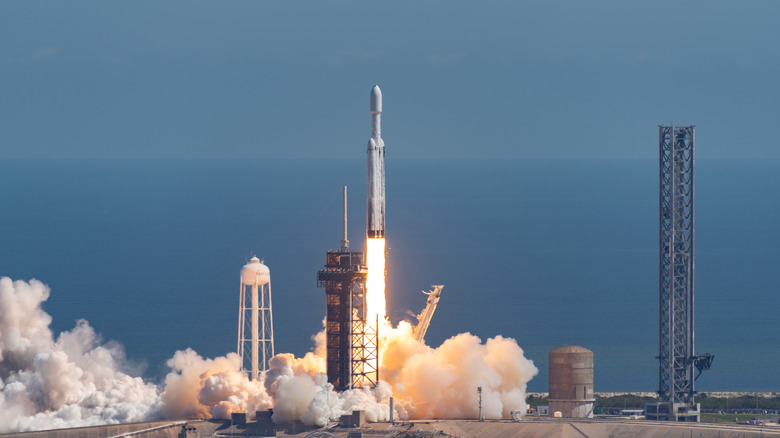
The idea of placing data centers in orbit might seem like a plot from a sci-fi story, but so did the concept of reusable rockets until SpaceX made it a reality. Now, the company is venturing into the AI sector, while simultaneously advancing in space exploration.
AI requires substantial computing resources. A 2024 NPR report highlighted that one ChatGPT query consumes almost ten times the electricity of a single Google search, or the equivalent of keeping a lightbulb on for 20 minutes! This immense demand has led to an expansion of data centers nationwide, all of which require significant power and water. Musk envisions moving these data centers beyond Earth. Starting in 2026, SpaceX intends to leverage Starship for satellite deployment, marking a departure from its previous reliance on the Falcon program to elevate satellite capabilities.
Musk aims to deploy up to one million solar-powered satellites, transforming them into orbital data centers. These satellites would harness solar energy indefinitely and could expel heat directly into space, contrasting with earth-bound centers that utilize complex cooling systems. While some experts believe this could take a decade to achieve, Musk anticipates that “within 2 to 3 years, the most cost-effective method for generating AI computing power will be located in space.”