While many smartphone brands have successfully established a culture of frequent upgrades among consumers, TV buyers typically display more caution when it comes to spending. It’s common for individuals to own their TVs for five years, or even up to a decade. Thus, the durability of the device becomes a key factor in choosing between OLED and LED TVs, which are the leading technologies competing in the marketplace.
According to Sony, their OLED televisions are as robust as their LCD counterparts, which also encompass LED models, as both rely on similar LCD panel technology complemented by LED backlighting. This claim aligns with the manufacturer’s stated lifespan for OLED and LCD panels, which generally falls between 30,000 to 50,000 hours. Newer models of OLED and quantum dot LCDs may boast up to 100,000 hours of usage.
However, it is wise to approach these claims about longevity with skepticism, as they rarely reflect actual user experiences. The figures provided often pertain only to the point where the display’s brightness diminishes to 50% of its original level. Critical factors such as burn-in issues in OLED screens and degradation of quantum dot layers in QLED TVs are typically overlooked; these issues can be significant even before a television reaches the end of its expected life. Therefore, we will analyze various real-world tests to gain a clearer understanding of TV longevity.
Avoid Edge-Lit LED Models
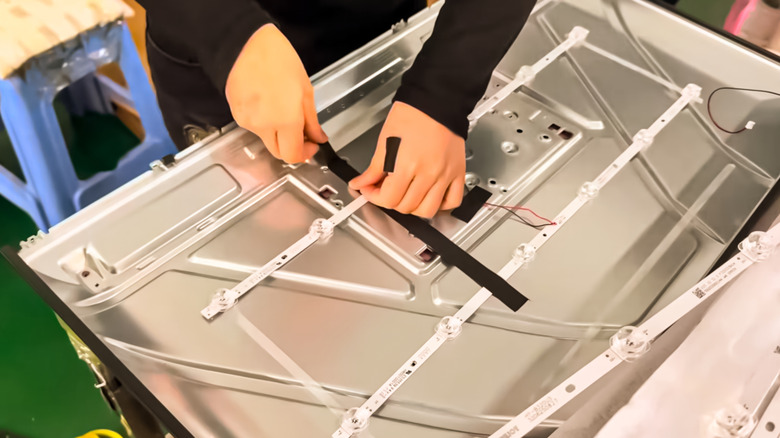
The burn-in problem associated with OLED screens is widely recognized, but fewer consumers understand how LED TVs deteriorate over time. Research by RTings has shown that over 25% of edge-lit LED TVs display serious uniformity defects during extensive testing. In a rigorous 10,000-hour endurance evaluation, a staggering 64% of edge-lit LED TVs experienced uniformity concerns, while improved direct-lit and full-array local dimming (FALD) models showed a significantly lower rate of 20%.
Moreover, edge-lit LED televisions often exhibit these issues much earlier than the full duration of the tests, with around 40% of them displaying uniformity defects after only 2,200 hours – approximately the average time spent watching TV in a year. This large-scale durability assessment indicates that LED screens are prone to degradation like OLEDs, but higher-end LED models tend to offer greater longevity.
This phenomenon can be explained through some basic physics principles. Regardless of whether a TV is edge-lit or features a more advanced backlighting system, it needs to produce a similar level of brightness. Direct-lit and FALD LED models spread thermal energy more evenly across a multitude of LEDs, making them more efficient. Conversely, edge-lit designs concentrate a significant amount of heat in a single edge of the display. This localized overheating can cause LEDs to degrade faster, affecting image quality and potentially leading to failure.
A Simple Solution to Prevent OLED Burn-In
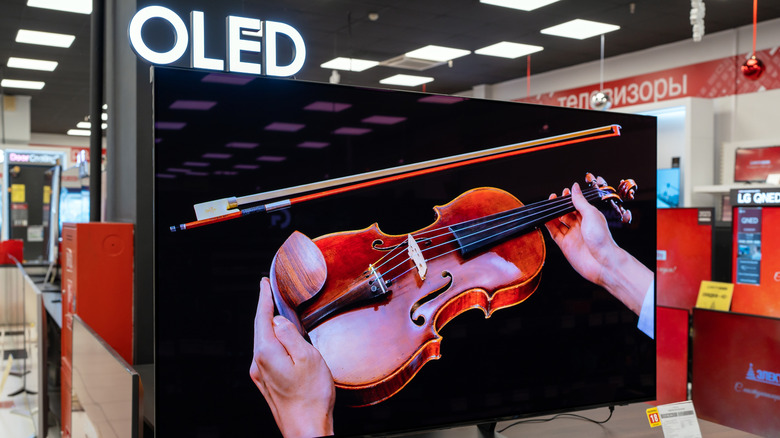
The issues of burn-in associated with OLED televisions are well-documented, but it’s a necessary compromise for achieving remarkable color accuracy. Each pixel in an OLED display acts as an individual light source, capable of turning off entirely to create true blacks without the need for dimming zones.
In contrast, LED-backlit TVs suffer from uniformity issues due to the unequal degradation of their individual LEDs over time. LED backlighting tends to be more stable than the variable rates of wear experienced among OLED pixels. For instance, static images, such as the red news banner on CNN, have been shown to lead to uneven wear in OLED panels, resulting in permanent burn-in effects.
Fortunately, modern OLED displays come equipped with burn-in mitigation techniques, like automatic pixel refresh features that help restore uniformity by adjusting pixel voltages based on usage patterns. However, these systems only activate when the television is in standby for several hours. RTings discovered this limitation in their tests, leading to more significant burn-in because they did not allow sufficient downtime for these refresh cycles to operate. Adjustments to their testing protocol were made afterward to permit these essential recovery processes.
Choose Your TV Based on Viewing Habits
It’s essential to note that contemporary OLED models include effective burn-in protection, as long as they are put on standby and given the time necessary for their compensation mechanisms to activate. Additionally, many high-end OLED televisions are designed with integrated heatsinks to further minimize heat-related degradation. Quantum dot technology is also being integrated to enhance uniformity and mitigate wear in both OLED and LED displays.
Nevertheless, rigorous evaluations have demonstrated that even quantum dots, a newer advancement, possess finite lifespans and can be vulnerable to uniformity issues and failures. Surprisingly, comprehensive longevity tests comparing OLEDs against LED TVs indicate no clear winner, suggesting that the decision should hinge on individual viewing habits and preferences rather than the innate technology.