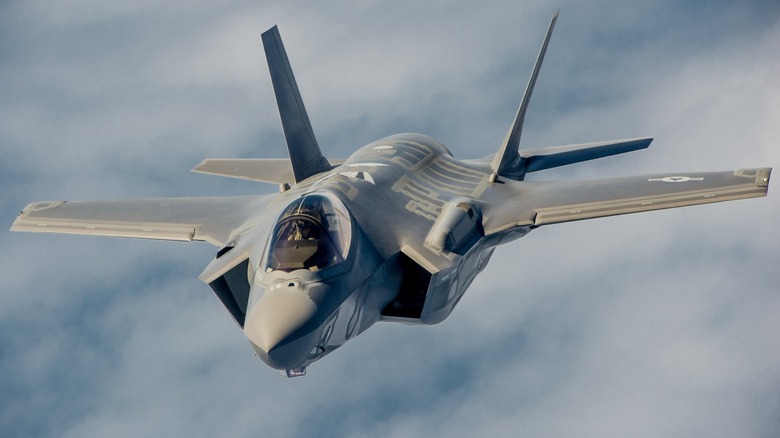
Lockheed Martin is at the forefront of producing the F-35 Lightning II, renowned for being one of the most advanced fifth-generation fighter jets worldwide. The F-35 is operational for the United States and its allied nations, and Lockheed has consistently enhanced the aircraft, incorporating new technologies that bolster its speed, stealth, and combat capabilities.
In February 2026, Lockheed Martin advanced the aircraft’s capabilities by integrating sophisticated AI technologies that could revolutionize aerial combat. The company successfully flight-tested a Combat Identification (Combat ID) feature that utilizes AI to make decisions within the aircraft’s information processing framework, marking the first instance of the F-35 employing tactical AI to autonomously generate Combat ID displayed to the pilot.
This technology might sound complex, but it parallels features seen in video games for years. If you’ve played games where enemies are highlighted as red icons on a map, this is essentially the function Project Overwatch aims to replicate. By leveraging AI to classify potential threats, the system can supply vital information to the pilot, who must make rapid decisions in high-pressure scenarios. The deployment of AI to distinguish between friend and foe promises to enhance force protection and increase the F-35’s effectiveness in potential future engagements.
Project Overwatch and the Future of AI Identification
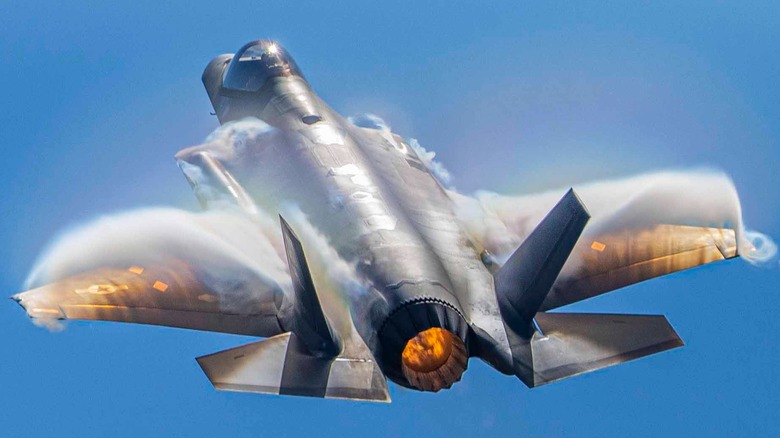
In a press release concerning Project Overwatch, Lockheed Martin indicated that their “AI/machine learning model clarified ID ambiguities among emitters, enhancing situational awareness and decreasing the time needed for pilots to make decisions” during tests conducted at Nellis Air Force Base, Nevada. Here, emitters refer to devices emitting radio-frequency signals, like communications and radar systems.
On the ground, engineers employed an automated tool to classify newly identified emitters, retraining the AI model, refreshing its database in just a few minutes, and relaying this information back to the aircraft. This process was completed within a single mission planning cycle, and as the learning model evolves, it should enhance system performance over time. Although this represents a functional model with established capabilities, it may take some time before Lockheed’s new AI implementation is ready for combat aircraft. Once deployed, it is expected to greatly accelerate pilot reaction times and enhance target identification, theoretically leading to higher mission success rates.
Utilizing AI technology in military operations is a growing trend both in the United States and internationally. The Department of War is particularly keen on systems that can conduct complex target identification with greater speed than human operators, prompting AI firms to evolve their offerings. While this journey has posed challenges for companies like Anthropic, Lockheed’s advancements seem to align with the Department of War’s objectives, ensuring that the next-generation F-35 is equipped for what Lockheed terms a 6th-generation system.