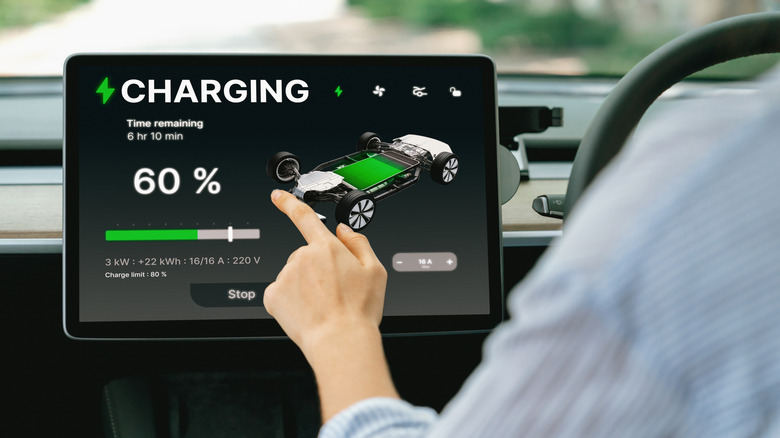
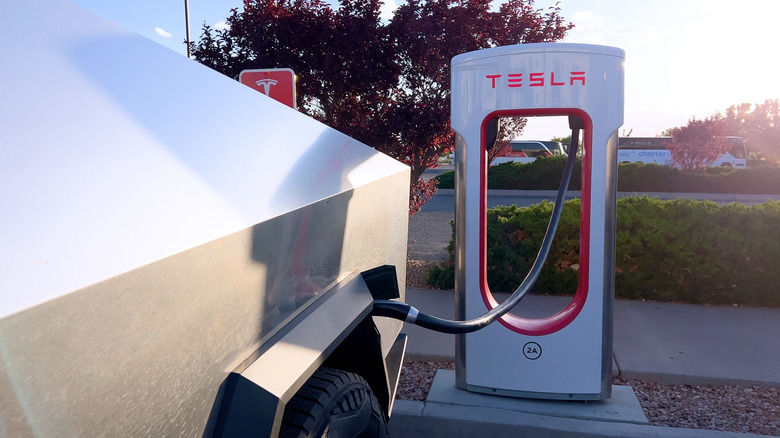
If you frequently use rapid charging for your smartphone or electric vehicle, you may have noticed a distinct trend. These devices charge extraordinarily quickly from 0% to 80%, but the pace significantly slows down for the final 20%. This explains why many modern smartphones can reach an 80% charge in less than half an hour, and numerous electric vehicles can do the same in roughly 15 minutes when using a DC fast charger like Tesla’s Supercharger.
As previously discussed, major electric vehicle manufacturers such as Tesla and smartphone brands like Apple and Samsung often advise limiting charging to a maximum of 80%. This recommendation is marketed as a method to help minimize battery degradation. However, it is also important to note that allowing the vehicle’s battery to reach a full 100% charge would mean occupying a charging station for a significantly longer period due to the decreased charging speeds beyond the 80% mark.
There are two primary reasons why it takes considerably longer to charge the last 20% of a lithium-ion battery. First, modern charging systems incorporate a built-in safety feature, and second, the specific chemistry of the battery itself. As lithium-ion batteries near their maximum capacity, their voltage approaches a critical upper limit. At this stage, the battery management systems within contemporary devices recognize this and automatically reduce the current flowing into the battery. This precaution is essential to prevent overheating. Slowing down charging rates as the battery approaches full capacity not only safeguards the chemistry within the battery but also extends its overall lifespan.
Understanding the Chemistry of Slower Charging Beyond 80%
Manufacturers intentionally reduce charging speeds after reaching an 80% charge, but this is only part of the story. The chemical properties of modern lithium-ion batteries are also responsible for this slower charging as they approach full capacity. To understand why, it’s essential to know that lithium-ion batteries contain a negatively charged anode and a positively charged cathode. The rapid charging process involves the transfer of lithium ions from the cathode to the anode.
At low charge levels, the anode has ample space to accept incoming lithium ions, allowing for efficient movement. However, as the battery becomes more charged, space for new ions diminishes, leading to a bottleneck where many ions congest the anode’s surface and convert to metallic lithium. This phenomenon is referred to as lithium plating in battery science. It’s crucial to note that this plating is a permanent occurrence; the excess ions that have piled up cannot simply be displaced later.
If fast charging continues beyond the 80% threshold, it becomes increasingly difficult for chargers to push lithium ions into the anode, simultaneously exacerbating the lithium plating issue. Consequently, battery manufacturers, as well as electric vehicle and smartphone brands, either reduce charging speeds past the 80% mark or present users with the choice to stop charging at that threshold.