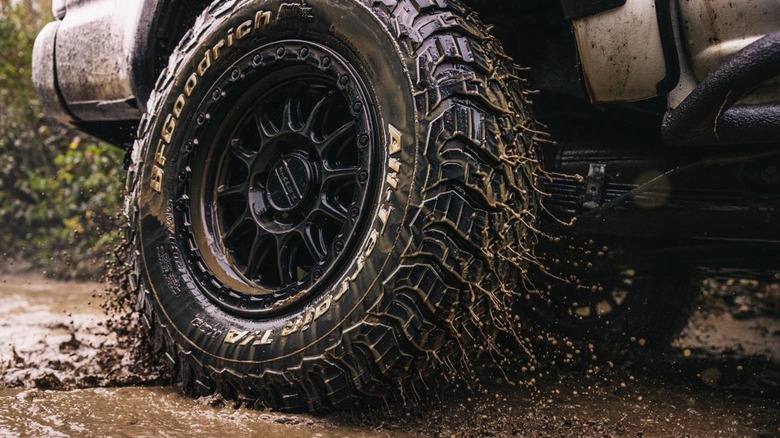
What comes to mind when envisioning an off-road truck or 4×4? Likely a raised suspension for enhanced travel, or perhaps camping gear for overlanding purposes. One essential element common to these vehicles is a specialized off-road tire, among which the legendary BFGoodrich Radial All-Terrain T/A stands out, celebrating its 50th anniversary in 2026. Indeed, this iconic tire was launched five decades ago, a remarkable feat for any automotive component, and especially for something as crucial and complex as tires.
It’s no exaggeration to state that this tire transformed off-roading, supporting everything from basic 4x4s like Jeep CJs and Ford Broncos to high-performance desert racers. It played a key role in the emergence of desert racing as a recognized sport, a fact highlighted in its early marketing campaigns. So, what sets it apart? After all, off-road tires were available long before the advent of BFGoodrich.
Its uniqueness lies, intriguingly, in its versatility. Unlike other tires specialized for either on-road or off-road, the Radial All-Terrain T/A is a radial tire. In fact, it holds the distinction of being the world’s first radial tire tailored for off-road performance. This design affords an exceptional level of adaptability compared to earlier tire models, delivering reliable traction on various surfaces while acknowledging that it may not excel in the specific demands of dedicated tires. Let’s explore the tire’s legacy and the elements that keep it in use today.
A Tire Born from Motorsports
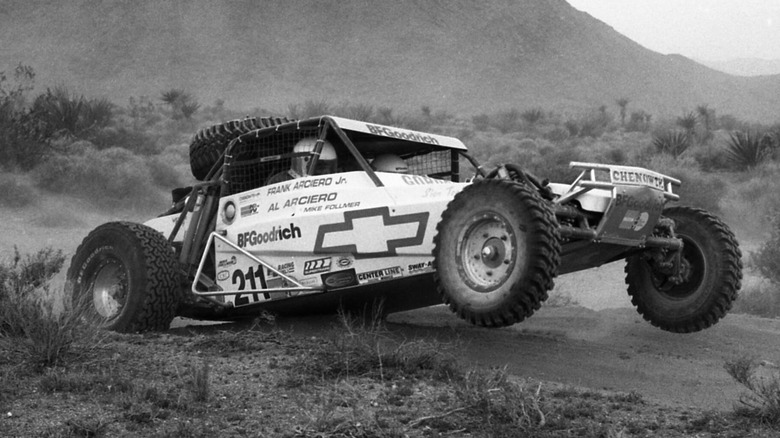
BFGoodrich has longstanding ties to motorsports, having pioneered the first street-legal radial racing tire called the BFGoodrich Tirebird in 1969. While the 1973 Oil Crisis marked the end of the Muscle Car Era, off-road racing thrived. A standout event of that time was the Baja 1000, a punishing 934-mile race through the Mexican desert that began in 1969. It was for this grueling race that BFGoodrich developed the Radial All-Terrain T/A.
The off-road community faced a significant challenge – the inflexibility of tires. Previously, tires were either designed for highway use or off-road performance, but none offered the ability to excel in both contexts. Sensing an opportunity, BFGoodrich leveraged their racing experience to fill this gap. In 1975, they enlisted the help of Baja racer Frank “Scoop” Vessels to pilot a new tire design in this challenging race. Fitting his Ford F-100 with the inaugural Radial All-Terrain T/A led to victories in both the 1977 Baja 500 and 1000.
The triumphs provided fertile ground for marketing, showcasing the Radial All-Terrain T/A as a road-friendly 4×4 tire—quiet, smooth, and able to endure with excellent tread life. Its striking design, featuring an aggressive pattern, radial construction, and notable white lettering, contributed to its iconic status and popularity.
An Enduring Legacy
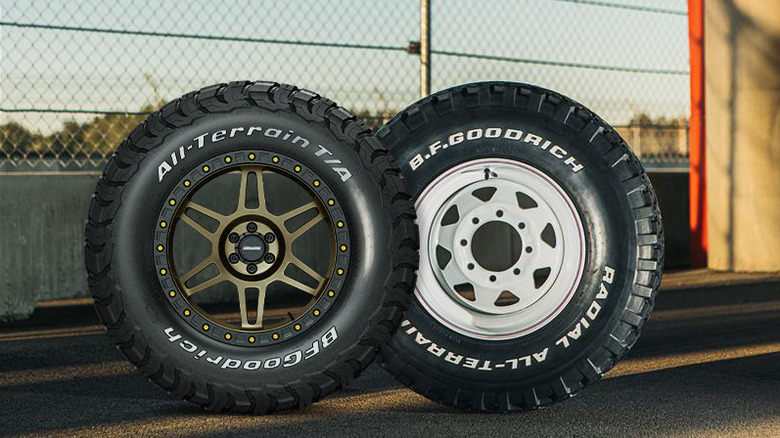
The popularity of the BFGoodrich Radial All-Terrain T/A has not waned over the years. Instead, it has laid the groundwork for a rich lineage of tires tailored to various markets, all centered on this pivotal model from 1976, albeit with notable updates. The Radial All-Terrain T/A is now entering its fourth generation, launching in 2024 with the KO3 design, promoted as featuring a 50,000-mile warranty, enhanced wear performance by 15%, and increased durability on gravel roads compared to its predecessor, the KO2.
In addition to this, BFGoodrich is commemorating the tire’s 50th anniversary by introducing the All-Terrain T/A in 12 new sizes ranging from 30×9.50R15/C to 35×12.50R22/E in celebration of the KO3 Phase 8 launch. The latest iteration includes all the expected modern enhancements distilled from half a century of innovation, while still preserving the ruggedness and distinctive aesthetic that endeared the original to enthusiasts.
Moreover, BFGoodrich’s commitment to racing persists; the company is currently a sponsor of the SCORE Baja 1000, ensuring that their tires remain dominant in the top classes of the race while continuing to be a staple choice among competitors. Notably, they have kept the appearance consistent since 1976, making them a fitting option for classic vehicles, despite not being categorized as dedicated classic car tires.