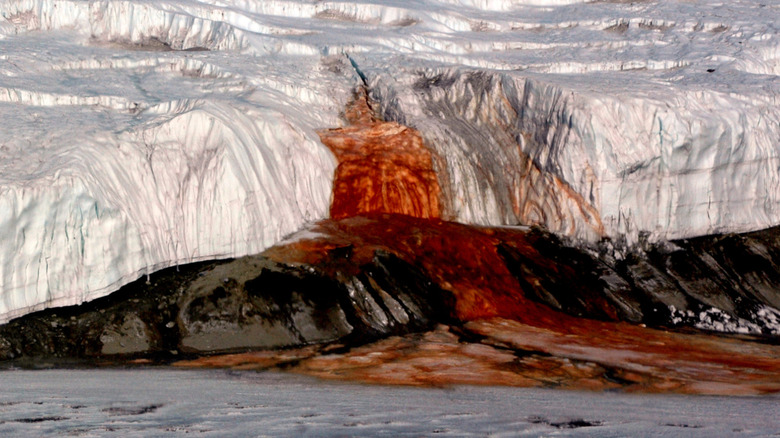
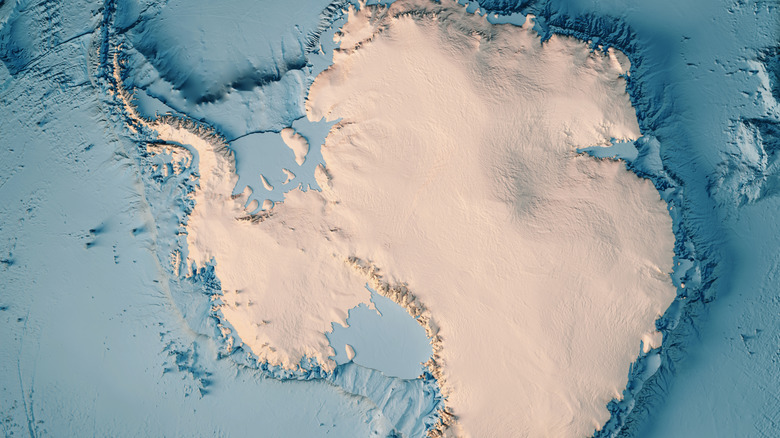
Located on the eastern side of Antarctica, Taylor Glacier has been surprising scientists for over a century. Sometimes, a sudden flow of deep red liquid appears from its base, coloring the adjacent ice red. This unusual occurrence was first observed back in 1911, leading to the glacier’s nickname, “Blood Falls.”
While researchers have long grasped the fundamental reasons for this phenomenon, such as the presence of ancient brine rich in iron beneath the glacier, the specific triggering mechanisms behind these episodes remained elusive. When this briny water reaches the surface, it oxidizes upon exposure to air, forming a rust-like color almost immediately. Recent research published in the journal Antarctic Science sheds light on the underlying processes. New findings indicated that the physical sinking of the glacier itself plays a crucial role in releasing this brine. Let’s explore this in detail.
Insights from the New Study
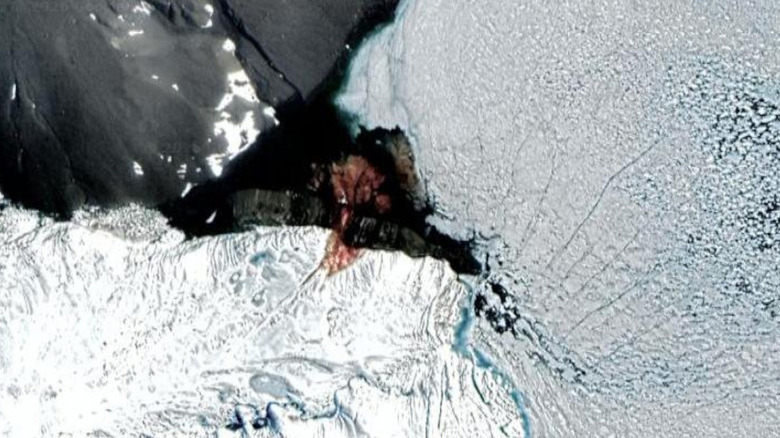
The findings emerged from a fortunate combination of events. In September 2018, a GPS device on the Taylor Glacier, a camera aimed at Blood Falls, and a temperature gauge in nearby Lake Bonney all recorded unusual activity simultaneously. This was a rare instance, as studies in this field often hinge on unpredictable events like retrieving data from a frozen, lost device.
During this occurrence, the glacier’s surface was observed sinking and decelerating, the camera documented a fresh outflow of red water, and the sensor in the lake noted a drop in temperature at a specific depth indicative of where the brine would accumulate. Geoscientist Peter T. Doran from Louisiana State University and his team connected the dots from these multiple datasets. Although the relationship between these occurrences might not be immediately apparent, Doran’s team has clarified their connection.
The researchers noted that the weight of the glacier compresses the salty water beneath it, leading to increasing pressure over time. Eventually, the glacier’s movement forces the brine towards fissures, allowing it to escape in bursts. Some of this brine emerges at Blood Falls, while other portions seep quietly into the lake. Once the brine is released, there is reduced pressure underneath, causing the glacier to settle and slow down. This phenomenon is akin to deflating a cushion — when air is let out, the cushion sinks. In this scenario, the “cushion” is the ancient brine, and the “weight” is the glacier.
Previous Investigations and Theories
This research is not the first endeavor to unravel the mystery of Blood Falls. In 2017, Jessica Badgeley and her team at Colorado College utilized radar technology to map the internal pathways through which the brine flows prior to its emergence. This discovery was particularly significant as it demonstrated that liquid water can reside in extremely cold ice — Taylor Glacier’s core is around 0°F. The high salt concentration lowers the freezing point of the water, allowing it to remain liquid, with heat released during freezing at the edges helping to keep the channels open.
In 2023, researchers at Johns Hopkins University discovered that the iconic red color is attributed to tiny iron-rich nanospheres, not traditional minerals. These nanospheres remained undetected under previous methodologies due to their non-crystalline nature, which was overlooked in earlier analyses. The latest study builds upon these prior findings to provide a more comprehensive understanding of the Blood Falls phenomenon.