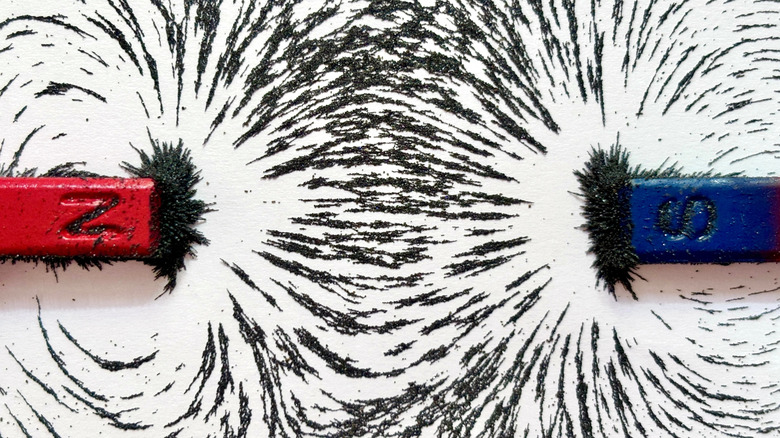
Researchers have long been exploring the feasibility of invisibility cloaks, achieving notable advancements over the years. Yet, another significant aspect of cloaking focuses on shielding delicate devices from magnetic fields that might disrupt their functionality. After years of research, a notable advancement has been reported.
In December 2025, engineers from the University of Leicester unveiled a groundbreaking concept for a cloaking system that can render any object undetectable to magnetic fields. This development, published in the journal Science, represents a monumental achievement as it is the first practical demonstration of constructing a magnetic cloaking device for tangible objects. Traditionally, these ideas were limited to theoretical frameworks and required specific geometries. However, the Leicester team asserts that their method allows for magnetic cloaks applicable to objects of various shapes, capable of enduring diverse magnetic field strengths.
Dr. Harold Ruiz, a co-author of the study, emphasized in a press announcement that this research “demonstrates that viable, manufacturable cloaks for intricate shapes are attainable, paving the way for advanced shielding solutions across science, medicine, and industry.” It’s important to mention that this current phase of the research centers on the methodology behind creating these devices. Following the validation of their approach, the team intends to fabricate a functional magnetic cloak and explore its applications in real-world scenarios. Additionally, the research indicates that their technique could significantly lower the costs associated with magnetic cloaking.
A Multifaceted Breakthrough
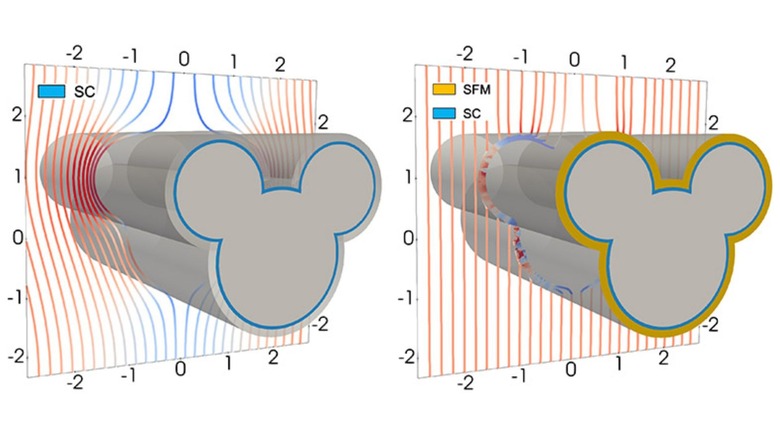
To construct their magnetic cloak, the researchers suggest utilizing readily available high-temperature superconducting tape, encased in a flexible outer layer made from a mixture of nickel and zinc combined with epoxy resin. By varying the proportion of nickel to zinc, they can manipulate the magnetic permeability of the cloak. However, there are considerable challenges. First, fabricating a magnetic cloak via this innovative technique presents notable difficulties. Additionally, the functionality of the cloak is not all-encompassing; it is influenced by the direction of the incoming magnetic field.
If the geometry shifts or a rotating magnetic field is introduced, the entire system necessitates recalibration. Crucially, since the cloak employs superconducting materials, it requires the surrounding environment to be maintained at low temperatures. While this may pose a challenge, the research team remains optimistic, citing advancements in the cryogenics sector that could facilitate the cloak’s implementation. Once these inherent challenges are addressed, they believe that their magnetic cloak could rapidly be adopted in settings where instruments are highly sensitive to external magnetic disturbances, such as scientific laboratories and medical facilities. This added layer of protection against magnetic interference would complement existing safeguards, particularly for critical systems powered by emergency backup sources.