The concept of alchemy has existed since antiquity, where it was believed that base metals could be transformed into gold. Although this idea is often regarded as mythological and has typically been dismissed as pseudoscience, there is a kernel of truth to it. Historically, lead was frequently identified as the target metal for such transformations into gold, a choice supported by their respective atomic numbers—gold is 79 and lead is 82.
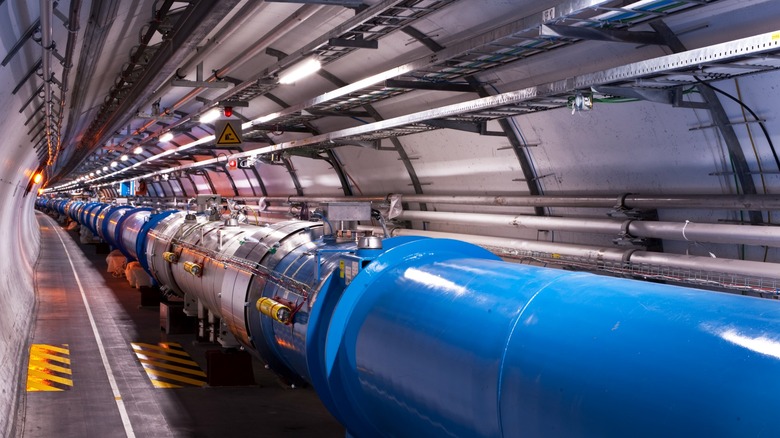
An atomic number corresponds to the total number of protons within an atom’s nucleus. Therefore, theoretically, it is conceivable to convert lead into gold by simply removing three protons. Such a procedure seemed daunting, but recent experiments at the Large Hadron Collider have demonstrated that it is indeed feasible. Through the ALICE (A Large Ion Collider Experiment) project, lead atoms were propelled at remarkable speeds to simulate the conditions present just after the Big Bang.
During the collisions of lead atoms, protons were expelled, leading to the creation of several gold atoms. The result yielded approximately 29 trillionths of a gram of gold. Although this quantity seems minuscule, it equates to approximately 86 billion atoms, marking a significant breakthrough. Despite this achievement not impacting the market price of gold in the immediate term, it suggests a form of alchemy can occur, thus shifting this ancient practice somewhat closer to scientific legitimacy.
The Process of Transmuting Lead to Gold

While the idea of accelerating lead atoms to create gold sounds straightforward, a complex scientific process underlies it. Protons within the nucleus are held together by the strong nuclear force, the most powerful fundamental force known. Upon colliding lead atoms, they are effectively annihilated, with the objective in ALICE being to create a near-collision situation. Such interactions generate an electromagnetic force, causing a field to diminish as one lead atom departs from another.
This results in the pulling of a proton, which is positively charged, leading to a remarkable transformation. When the conditions align favorably, and a lead nucleus nearly contacts another, a strong electric field forms. The dynamic interchange between the two nuclei can sometimes lead to the elimination of protons. If a nucleus of lead happens to shed three protons, it transforms into an atom of gold.
The newly formed gold nuclei are not directly observable; instead, researchers utilize specialized equipment to detect them. The team involved in the ALICE project estimates that around 89,000 gold nuclei may be formed every second. However, the experiment’s main focus extends beyond just gold production. Due to their tendency to collide with the collider’s walls, these gold nuclei often present more challenges than advantages, alongside small quantities of thallium and mercury, which result from the removal of one and two protons, respectively.