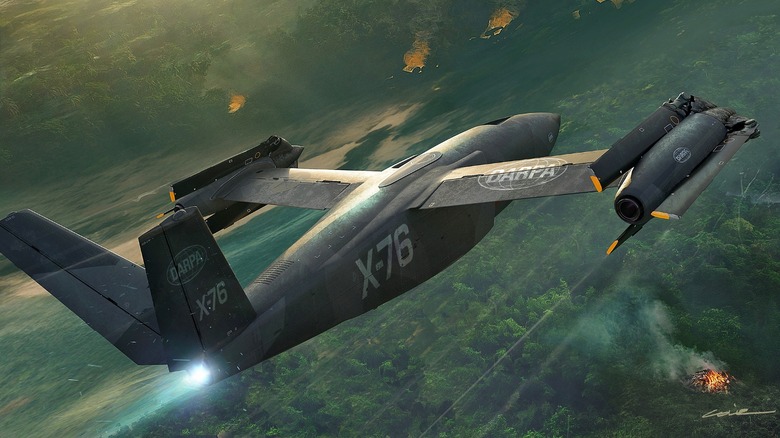
The Defense Advanced Research Projects Agency (DARPA) has consistently pioneered some of the most groundbreaking military aircraft, and its latest project is continuing that legacy. On March 9, 2026, DARPA introduced the SPRINT X-76, a technology demonstration aimed at achieving high-speed, runway-independent flight for military purposes. The agency recognized that a significant challenge in military operations is balancing the necessity for speed with the “go-anywhere” adaptability of slower helicopters.
SPRINT, which stands for “SPeed and Runway INdependent Technologies,” seeks to develop a new class of aircraft that can combine jet-like speeds with the landing and takeoff capabilities of helicopters. While DARPA has provided initial artistic impressions of the X-76, physical construction is already underway. Bell Textron Inc., also involved in the creation of military helicopters and the V-22 Osprey tiltrotor, is currently building the prototype after a successful Critical Design Review granted SPRINT its designation as an X-aircraft.
This project is a collaboration between DARPA and U.S. Special Operations Command (USSOCOM), aiming to resolve the longstanding challenge in aviation of balancing the high speeds of fixed-wing aircraft with the agile, runway-independent functionality of vertical takeoff and landing platforms. Although there are existing vertical-take-off aircraft and hybrid models like the V-22, the X-76 is designed to surpass their capabilities, paving the way for the future of military aviation.
Key Details About the SPRINT X-76
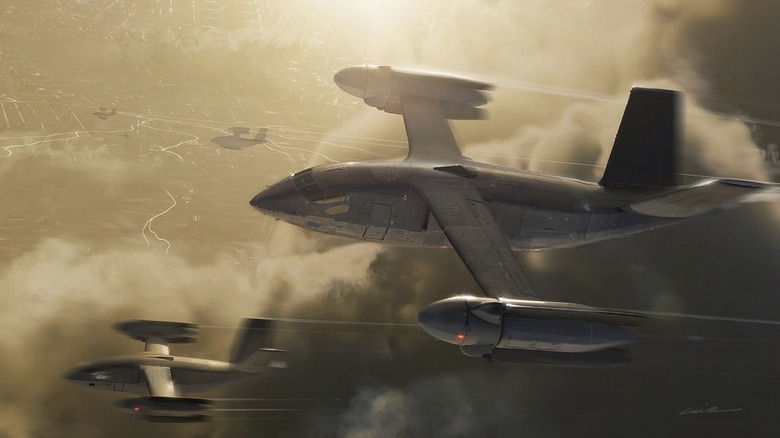
Bell is advancing with the manufacturing and preliminary testing of the X-76 prototype, which is expected to take considerable time to develop fully. Assuming its performance is validated, the Department of Defense may pursue its acquisition, although timelines for military designation can be uncertain and funding-intensive. Nevertheless, the information gathered so far from DARPA and Bell highlights that the X-76, beyond its innovative design, could serve as a major asset for SOCOM.
The anticipated capabilities of the aircraft include a cruising speed of at least 460 mph, the ability to hover in challenging environments, and operation from non-prepared surfaces. In contrast, the relatively costly V-22 Osprey achieves a cruising speed of 276 mph, indicating that the X-76 aims to significantly enhance speed compared to traditional rotorcraft. Cmdr. Ian Higgins, managing the DARPA SPRINT program, emphasized the significance of their work: “The runway has long been both an advantage and a constraint, offering speed while introducing a critical vulnerability. With SPRINT, we are not only designing an X-plane; we are creating options. Our goal is to offer the flexibility of surprise, rapid reinforcement, and life-saving speed anywhere in the world, all without the need for a runway.” Flight testing is projected to commence in early 2028, continuing Bell’s legacy of successful experimental aircraft initiatives.