As the strongest blue-water navy globally, the United States Navy demands significant resources for its operations. While many focus on its aircraft carriers, submarines, and advanced warships, a crucial component of the Navy’s mission entails the transportation of various cargo. Looking ahead, the Navy is integrating unmanned vessels into its logistical framework.
Blue Water, a defense contractor, has introduced the Liberty class, a series of medium-sized unmanned surface vessels capable of operating independently for up to three months across the Pacific. This advancement in naval automation will significantly aid in delivering crucial supplies such as medical aid, food, and munitions worldwide.
Globally, military forces are transitioning towards a mixed fleet of traditional and autonomous vessels. Incorporating Liberty Class ships into the U.S. Navy’s operations will serve to enhance efficiency by decreasing the number of personnel required for logistical purposes, thereby allowing troops to focus on combat readiness.
Blue Water’s Liberty Class autonomous ships
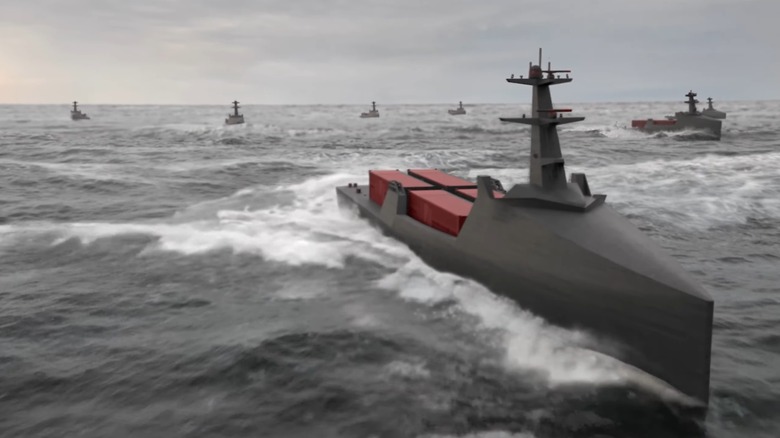
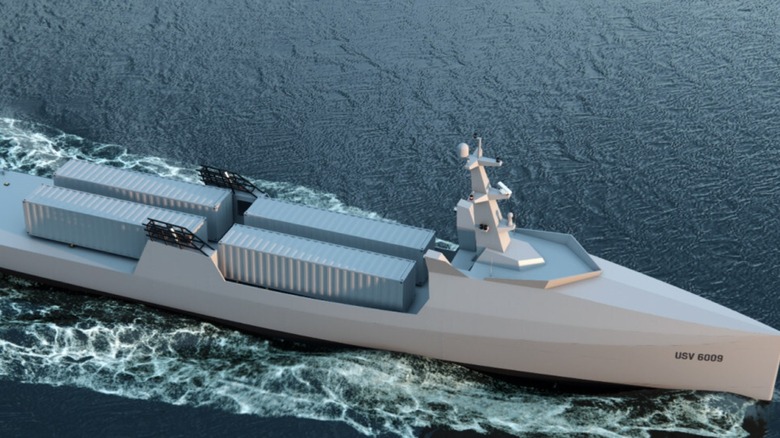
The Liberty Class has been designed by Blue Water using the Damen Stan Patrol 6009 hull as a foundation, showcasing an axe bow shape for better stability in turbulent waters. Each vessel spans 190 feet with a 30-foot beam and has a displacement of approximately 850 tons. These ships can achieve speeds of up to 29 mph and cover 11,500 nautical miles while accommodating four standard 40-foot containers, with a maximum cargo capacity of 165 tons.
Developed without provisions for heating or air conditioning, these vessels are not intended to support crew members. The absence of human living spaces greatly simplifies the internal structure, enabling operation for up to 90 days autonomously.
By utilizing a pre-existing hull design, Blue Water accelerates production processes compared to conventional military shipbuilding regulations. This approach minimizes the time required for hull development and promotes the use of readily available components. Liberty Class ships are being assembled at Conrad Shipyard in Morgan City, Louisiana, incorporating robotic technologies to construct between 10 and 20 vessels annually. The first ship’s construction commenced in March 2026, and if successful, we could soon witness these autonomous vessels in action across the globe.
Blue Water chose its new ship’s name well
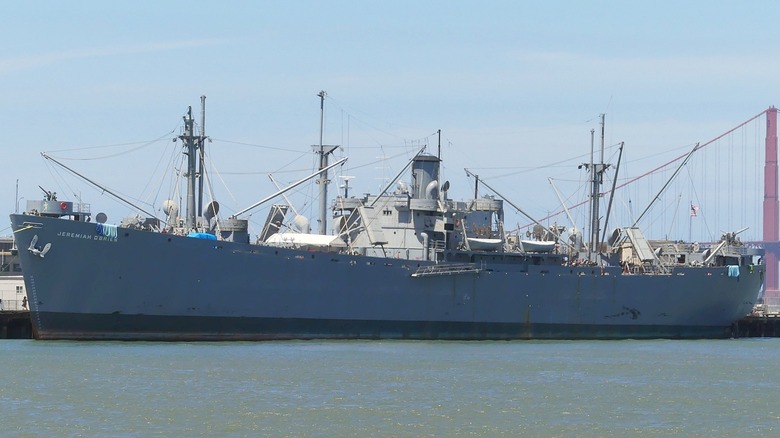
The Liberty Class vessels are notable not only for their technological advancements but also for their swift production capabilities. The name ‘Liberty’ recalls the essential Liberty Ships from World War II, which, while not as celebrated, were crucial in supporting the Allies. These ships were designed for rapid mass production, ensuring timely delivery of troops and supplies.
During the war, more than 2,700 Liberty Ships were constructed in the United States, ferrying vital equipment to various war fronts. The naming of Blue Water’s vessels signals a commitment to expedited construction, reminiscent of the remarkable shipbuilding rate of the 1940s. The U.S. shipyards produced an astounding average of three Liberty Ships every two days from 1941 to 1945, a feat not matched since.
The title of the fastest Liberty Ship from keel laying to completion goes to the SS Robert E. Peary, which was astonishingly built in just over four days. Though the advanced autonomous Liberty Class ships will inevitably take longer to complete, the choice of name emphasizes a significant legacy.